All topics
The network drive
Files and websites
Cameras and sensors
A Stand for the Server
A phone lying flat serves files just fine, but its cameras stare at the shelf and the ceiling. This 3D-printable stand holds the phone upright while it charges and aims a camera into the room.
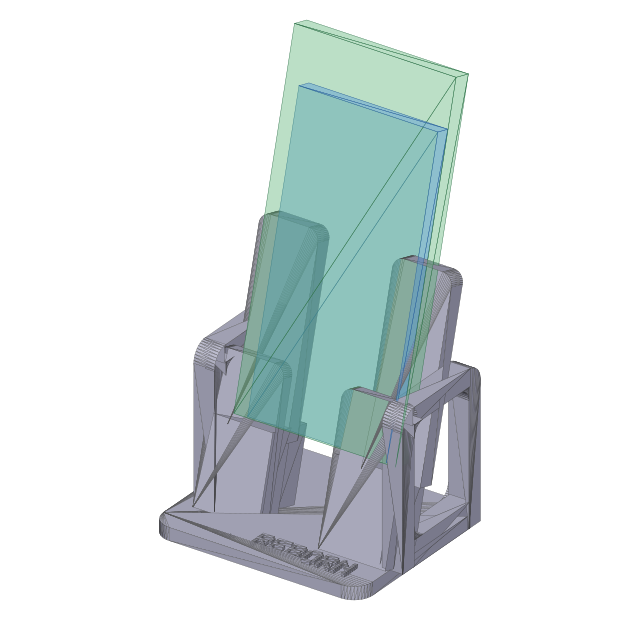
How it holds the phone
The phone stands on a seat and leans back against a single plate, which is narrower than any iPhone and so stays hidden behind it. Its charging plug sits in a slot in the middle of the seat, and that plug is what keeps the phone from sliding sideways. A low chin at the front keeps it from sliding forward. Nothing else touches the phone: the buttons, the microphone, the speaker, both cameras and the whole screen stay clear, and the sides are open to the air around a device that is busy around the clock.
Below the seat the slot opens into a well, and from the well a channel runs through the base to its back edge. On a solid surface the cable lies flat in the channel and leaves at the back; on a shelf edge or a grate it hangs straight down. Lightning and USB-C both fit, including cables with the wide moulded plugs.
Docking with the cable attached
Nothing holds the cable captive, so a phone lifts out and drops in with its cable connected, which matters when that cable also carries an external disk. The well under the seat gives the cable room to fold when the plug is lifted to meet a phone and lowered again; a stiff cable may need a little help settling into it.
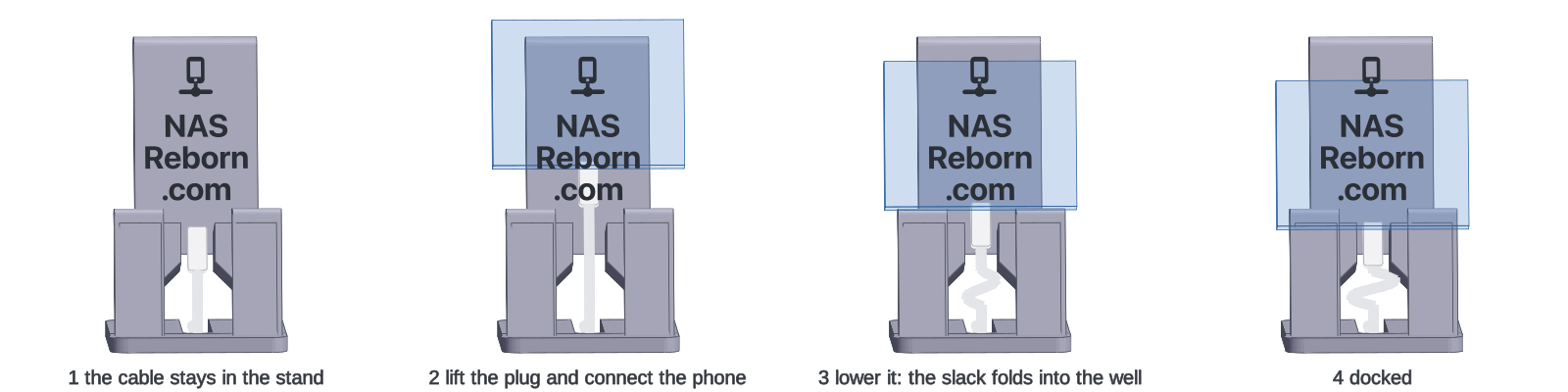
Lifting the phone out draws the cable back up the same way. With no phone on it, the plate shows the NAS Reborn mark and address.
Which file to print
The phone leans back by the angle in the file name, and the two cameras look opposite ways. Turn the back of the stand to the room and the rear camera looks down by that angle, so a steeper stand suits a higher shelf. Turn the screen to the room and the front camera looks up by the same angle, so a steeper stand then suits a lower shelf, with the screen readable from above.
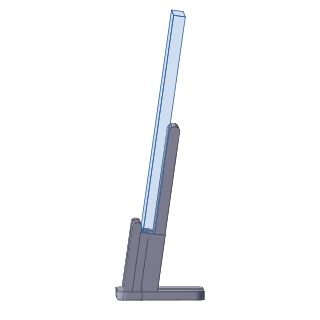 8°close to level, either way round
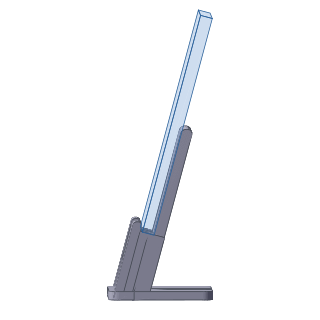 15°the middle
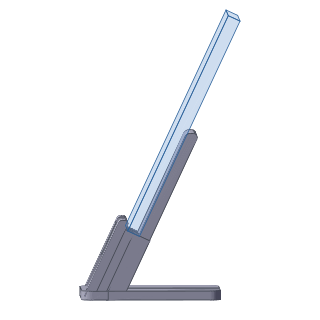 25°rear camera on a high shelf, front camera on a low one
One stand fits every iPhone from the SE to the Max models, bare or in a thin skin. The chin ends below every tab bar, and the phone leans on the same plate at every angle, so the angle stays true.
Printing
Print the file as it is oriented, with the flat side on the bed, and it prints without supports. Three walls and 10 to 15 percent infill are plenty and come to between 55 and 65 grams of filament depending on the angle. PETG keeps its shape a little better than PLA against a phone that stays warm, but PLA works. A matte filament shows the raised lettering on the plate best.
Changing the design
Tinkercad can import the files, where you choose millimetres when asked, and you can then cut, extend or merge them like any other shape. A stand for a phone in a thick case does not have to start from scratch.